What a fun way to live
Home / Blog / Reading comprehension activities for kids
By Rohi Kids · October 2, 2026
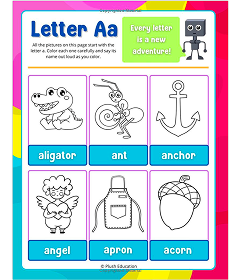
Letter Aa activity
Reading comprehension means understanding what you read, not just sounding out the words.
Start with who is involved, what happens, and where.
Ask children to identify the dog and describe its action: running.
Comprehension helps children follow instructions, learn vocabulary, find details, answer questions, retell stories, and connect ideas.
These skills support longer stories and informational reading.
Children gradually recognize letters, connect sounds, blend words, and read sentences.
Ask simple questions once children can read short sentences.
Ask: What is sleeping? Where? What is the cat doing?
Choose one or two activities daily. Keep practice varied and enjoyable.
After reading, ask who the story is about, what happened, and where.
Who has the ball? What color is it? Where does Sam play?
Match each simple sentence with the picture showing its meaning.
Pictures support vocabulary and sentence understanding.
Read a sentence, then draw its meaning.
Add detail gradually: “Draw a small red ball under the table.”
Read a sentence, then compare it with a true-or-false statement.
Ask: “The boy has a red hat. True or false?”
Complete “The dog is _____” with a word that makes sense.
Use a picture clue; increase difficulty gradually.
Mix three story events and ask children to put them in order.
This introduces the idea of sequence, an important part of understanding stories.
Retell a short story using “First…”, “Then…”, and “Finally…”.
Focus on important events, not remembering every detail.
Read “Mia has three yellow flowers.” Ask how many flowers she has.
Find the answer directly in the sentence.
Pause a story and ask: “What might happen next?”
What might Tom do? Invite different predictions.
Ask what a passage is mostly about, then draw that idea.
Talk about the drawing together.
Young readers are still developing vocabulary, phonics, attention, and language understanding. Keep activities simple.
Try short sentences, picture matching, questions, sequencing, retelling, predictions, and vocabulary games.
Phonics helps children decode words; comprehension helps them understand their meaning. Practice both together.
Decode dog, under, and table before discussing the sentence.
Explore simple word reading in our CVC guide.
Unknown vocabulary can make a sentence harder to understand.
Ask what an unfamiliar word means, then explain it simply.
Use the new word in another familiar context.
A few minutes of shared reading can create useful practice.
Read together, ask questions, explore pictures, discuss words, and make predictions.
Connect stories with your child’s experiences.
Mix activities instead of using a long question list.
Try Read → Match → Retell or Read → Predict → Discuss.
Make reading an adventure, not a test.
Some children decode well but need help with meaning; others understand read-aloud stories better than independent reading.
Simplify with shorter sentences, pictures, explained vocabulary, shared reading, and one question at a time.
Most importantly, keep the experience supportive and encouraging.
Comprehension starts before independent reading. Read aloud, discuss characters, ask questions, predict, and retell.
Apply these skills to written sentences as reading develops.
There is no single starting age; comprehension grows with language and reading.
A sentence, picture, and thoughtful question can create a valuable learning moment.
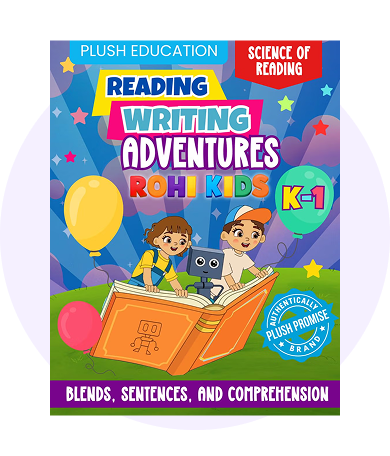
That’s the philosophy behind the Rohi Kids K-1 Reading & Writing Adventures collection.
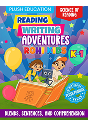
The Rohi Kids Blends, Sentences & Comprehension workbook supports practice moving from words toward sentences and understanding.
Use it alongside phonics, vocabulary, and shared reading.
Practice letter recognition and early alphabet skills.
Practice simple word patterns and blending.
Move from words into sentence reading and comprehension.
Practice common words that young readers encounter frequently.
Continue developing handwriting and writing skills.
Reading comprehension is a child’s ability to understand and make meaning from what they read or hear.
Read together, discuss vocabulary, ask questions, predict, and retell.
Try picture matching, sequencing, read-and-draw, sentence completion, true-or-false games, and retelling.
It helps children understand information, follow instructions, learn words, and communicate ideas.
Yes. Listening, picture discussions, questions, predictions, and retelling build comprehension before independent reading.
Phonics supports decoding, freeing attention for sentence and story meaning.
Learning to read isn’t simply about saying words correctly. It’s about discovering what those words mean.
A sentence can introduce an idea, a story can create a question, and a new word can open a new world.
Encouragement and engaging practice help children become confident, thoughtful readers.