What a fun way to live
By Rohi Kids · October 2, 2026
Early reading starts with connecting letters and sounds to make simple words.
CVC words such as cat, dog, sun, map, bed, and pig help beginning readers connect letters with sounds.
Turn reading practice into enjoyable games at home or school.
Try these simple activities to build blending skills and confidence.
CVC stands for Consonant-Vowel-Consonant. It describes a simple word pattern such as cat, dog, sun, or pig.
A CVC word normally contains three sounds represented by three letters. For example:
The middle letter is usually a short vowel: A, E, I, O, or U.
This simple structure makes many CVC words useful for children who are beginning to practice blending sounds together.
CVC words help children blend individual sounds into a word.
For example, a child learning the word map can practice: /m/ + /a/ + /p/ → map.
Practice shows children how letter sounds combine to make words.
CVC word practice can support several early literacy skills, including:
Focus on understanding sounds, not memorizing word lists.
Use paper, letter cards, pictures, or everyday objects.
Here are some ideas parents and teachers can try.
Write individual letters on small cards. For example:
Say each sound, then blend: C → A → T → CAT.
Once they understand the activity, change one letter to create a new word: CAT → BAT → BIT.
Create simple picture and word cards. For example:
Match each printed word with its picture.
Word families are another fun way to introduce patterns. For example:
Children can begin noticing that words may share similar sounds and letter patterns.
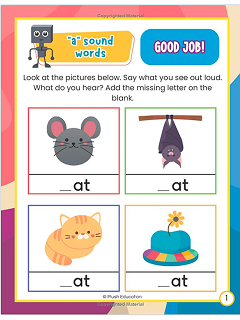
Write a familiar CVC word but leave one letter blank. For example:
Ask: “Which letter is missing?”
The child can choose A to complete: CAT.
You can make this more challenging by changing the missing position: _ AT or CA _.
Once children are comfortable with simple CVC words, try changing one sound at a time. For example:
Change C to B: CAT → BAT.
Change B to H: BAT → HAT.
Change H to M: HAT → MAT.
This activity helps children notice how individual letters and sounds affect the entire word.
One of the useful features of many CVC words is their short-vowel pattern.
Children can practice identifying the vowel sound in words such as:
Introduce short vowels gradually, giving children time to hear and practice each sound.
CVC practice doesn’t have to feel like formal schoolwork. You can incorporate simple reading activities into everyday routines.
Use letter cards or magnetic letters to build simple words.
Ask your child to look for short, familiar words.
Say a simple CVC word and encourage your child to write the sounds they hear.
Turn word practice into a matching, sorting, or guessing game.
Look for simple words on labels, books, signs, or other child-friendly materials.
The most important thing is to make practice feel encouraging rather than stressful.
Children develop at different rates; there is no single age for mastering CVC words.
CVC activities can be introduced when a child is beginning to:
For many kindergarten and K-1 learners, CVC words can become a useful part of early phonics practice.
If practice is difficult, use fewer letters and pictures. Increase the challenge gradually.
Early reading doesn’t have to be repetitive.
Children can learn through stories, games, pictures, word-building activities, challenges, and creative practice.
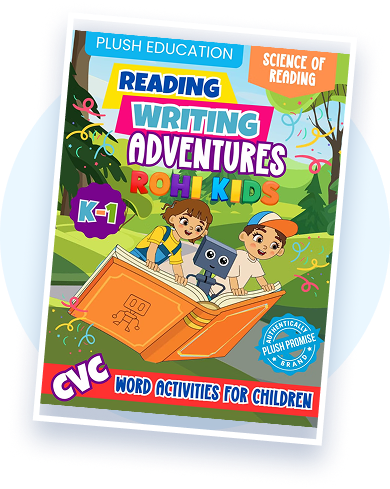
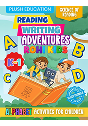
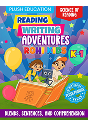
That’s the idea behind the Rohi Kids K-1 Reading & Writing Adventures collection.
Explore activity-based reading and writing practice for young learners.
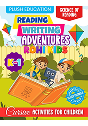
Continue practicing with the Rohi Kids CVC Word Activities for Children workbook.
CVC words are one part of a broader early-reading journey.
As children develop confidence with simple words, they can continue exploring:
You can support that progression with other Rohi Kids learning resources.
This simple structure makes many CVC words useful for children who are beginning to practice blending sounds together.
Help young learners practice letters and early alphabet skills.
Continue from individual words toward sentence reading and comprehension.
Practice commonly encountered words as children’s reading skills develop.
Add handwriting practice to your child’s reading and writing journey.
CVC stands for Consonant-Vowel-Consonant. It describes a simple word pattern such as cat, dog, sun, or pig.
Examples include cat, bat, map, bed, pig, sit, dog, hot, sun, and cup.
CVC words can provide beginning readers with opportunities to practice letter sounds, blending, and decoding simple words.
Children can gradually progress toward more advanced phonics patterns, word blending, sentence reading, sight words, and reading comprehension as their skills develop.